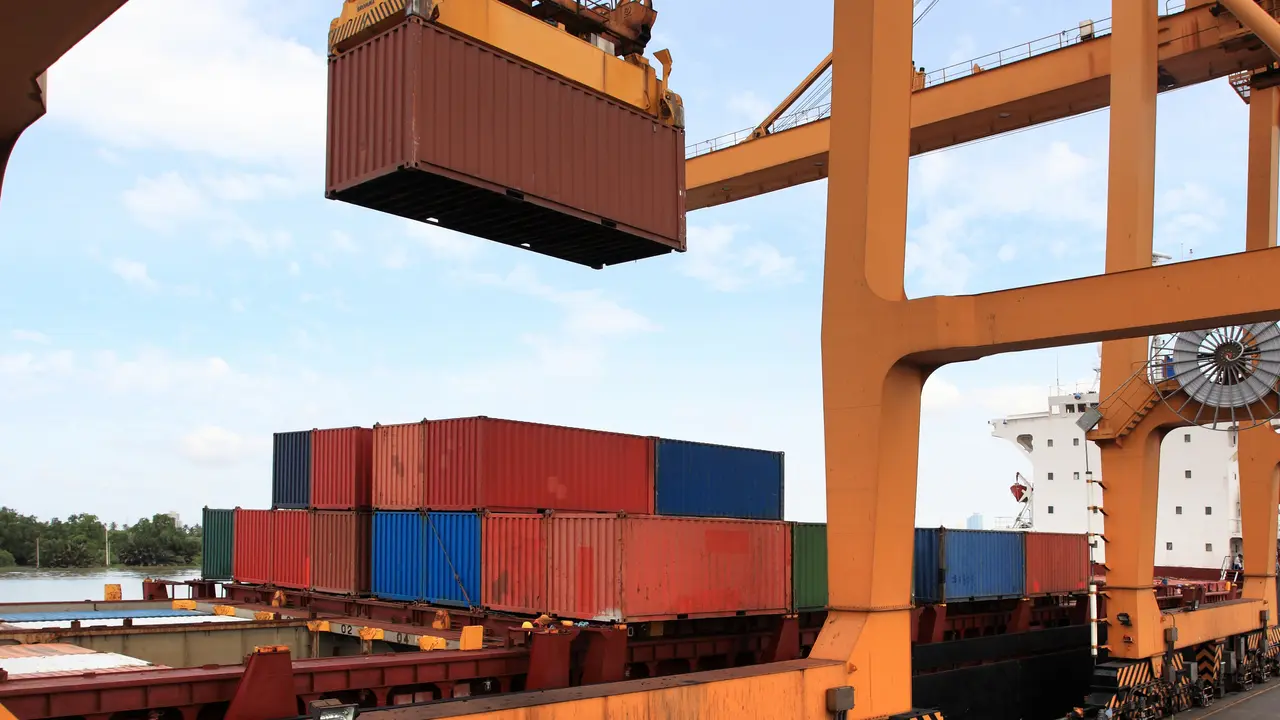
Before containers, cargo moved piece by piece (break bulk): slow, costly and risky. In 1956, Malcolm McLean changed everything.
1) Malcolm McLean and the Ideal X
In 1956 the Ideal X carried 58 standardized containers. McLean didn't invent the metal box, but he established intermodality: the same unit travels by ship, rail or truck without repacking.
2) Global impact
- Handling costs dropped by 90%+.
- Ports became faster and more predictable.
- Pillars of globalization: over 80% of world trade moves in containers.
3) Container types
- Dry Van (DV) 20'/40'.
- High Cube (HC): +30 cm height.
- Reefer, Open Top / Flat Rack, Tank.
4) Capacity (approx.)
- 20': ~33 m³
- 40' ST: ~67 m³
- 40' HC: ~76 m³
5) Key differences
- 40' ST vs 40' HC: HC adds 30 cm headroom.
- SOC (shipper owned) vs COC (carrier owned): availability, cost and liability trade-offs.
6) Manufacturing
Production concentrates in Asia (e.g., CIMC, DFIC, CXIC). Some carriers build part of their own fleets.
7) Service life
Typical 12–15 years at sea; many units are repurposed ashore afterwards.
8) World inventory (Aug 2025)
- ~52 million TEUs worldwide.
- Asia leads output; Europe and the Americas show spot overcapacity in some ports.
Conclusion
The container is the invisible engine of global trade. Understanding its evolution, types and market dynamics improves planning for cost, risk and capacity.